

Rigid Flex Printed Circuit Boards in High-Variage Applications
Whether you’re designing your own rigid-flex circuit board or working with PCB manufacturing designers, you need to be aware of some basic safety and reliability issues. One of the most important factors to consider is conductor spacing on your flex circuit boards, especially in high-voltage applications. Ideally, you should use a material such as HVPF or Kapton that can handle 1000 V/mil. This will provide you with enough space between the copper traces for your circuitry to withstand high voltages without suffering damage.
You can also reduce risk by using a non-halogen soldering process to connect your flex circuits. This will help ensure that any exposed copper has a protective coating and won’t corrode in the presence of halogen chemicals. In addition, you should use a low-temperature, no-flow prepreg to bond your flex and rigid layers together. This will minimize the amount of time and effort needed for assembly and reduce your cost by reducing rejects and reworking.
rigid-flex printed circuit board are ideal for a variety of applications that require premium technology in limited space. They can be used in medical equipment, mobile phones, GPS devices, control tower instrumentation, and many other industrial and consumer electronics. In fact, they are now used in almost every household appliance that includes a computer or cell phone, from washing machines to televisions.
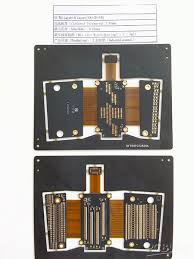
Advantages of Rigid Flex Printed Circuit Boards in High-Variage Applications
One of the most significant advantages that these devices offer is their ability to withstand high-vibration environments. This is particularly beneficial in electronic devices that must withstand frequent movement and vibration, such as motors, pumps, medical imaging equipment, military missile guidance systems, and cameras. Rigid flex circuits are able to handle this dynamic flexing without the risk of failure due to fatigue, cracking, or other mechanical stress on components or interconnects.
Another benefit of rigid flex circuits is their capacity to offer higher component density than traditional PCBs. This allows you to pack more premium technology into your device, giving you more options for product features. Rigid flex circuits can also be used to replace multiple connectors, which in turn lowers your overall product weight and costs by eliminating the need for additional parts and cables.
In addition to their mechanical flexibility, rigid-flex PCBs excel in terms of electrical performance. The use of high-quality materials and advanced manufacturing techniques ensures consistent signal integrity, minimal crosstalk, and low impedance throughout the board, crucial for high-speed digital and analog circuits.
Another advantage of rigid flex circuits is their durability. These circuits are able to withstand long-term use, even in harsh environments such as automotive, aerospace, and marine applications. This is because they are made of durable materials that can withstand environmental and mechanical stresses, such as vibration or shock. Additionally, they are made of thin and lightweight materials, making them easy to bend, crease, or fold into small spaces that other PCBs cannot.


