

Role of Logging in AI Testing Platforms
Logging plays a critical role in AI testing platforms by providing visibility into model behavior, detecting anomalies, and ensuring traceability throughout the development and deployment process. AI models are inherently complex, relying on vast amounts of data and intricate algorithms to make predictions. Without proper logging mechanisms, identifying errors, debugging issues, and maintaining performance become significantly more challenging. By capturing detailed logs of model training, inference, and system operations, AI testing platforms can enhance transparency, improve reliability, and support compliance with regulatory standards.
One of the primary functions of logging in AI testing platforms is debugging and error detection. AI models often go through multiple iterations of training and testing, making it essential to track errors at each stage. Logs provide real-time records of system activity, including input data, model outputs, and computational processes. When an issue arises, such as incorrect predictions or unexpected behaviors, developers can examine logs to trace the problem back to its source. This level of visibility helps identify issues like data inconsistencies, algorithmic biases, or computational errors, allowing for quick resolution and model refinement.
Performance monitoring is another crucial aspect of logging in AI testing platforms. AI applications must operate efficiently under different workloads and real-world conditions. Logs capture key performance metrics such as inference time, resource utilization, and memory consumption, helping developers analyze system performance over time. By continuously monitoring these metrics, teams can detect slowdowns, identify bottlenecks, and optimize the End-to-end testing platform for Al applications to enhance speed and scalability. Cloud-based AI systems, in particular, benefit from logging as they rely on dynamic resource allocation, where performance fluctuations must be managed effectively.
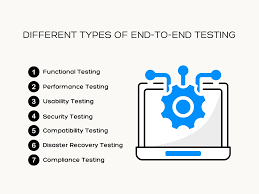
What Is the Role of Logging in AI Testing Platforms?
Logging also contributes to model explainability and interpretability, which are essential for building trust in AI systems. Many AI models, especially deep learning algorithms, function as “black boxes,” making it difficult to understand how they arrive at specific decisions. Detailed logs can record feature importance, intermediate outputs, and decision pathways, helping researchers and developers analyze the model’s reasoning process. This is particularly important in regulated industries such as healthcare and finance, where AI decisions must be transparent and justifiable. By maintaining comprehensive logs, AI testing platforms facilitate better accountability and regulatory compliance.
Security and anomaly detection are additional benefits of logging in AI testing platforms. AI systems can be vulnerable to adversarial attacks, where malicious inputs are designed to manipulate model predictions. Logs help detect unusual patterns in data inputs, system access, or model responses, allowing for early identification of potential threats. Additionally, logging plays a key role in data governance by tracking how sensitive information is processed and used within AI models. Organizations can use logs to ensure compliance with data protection regulations such as GDPR and HIPAA, reducing legal and ethical risks.
In continuous integration and deployment (CI/CD) workflows, logging ensures smooth updates and rollback mechanisms for AI models. When new model versions are deployed, logs help compare their performance with previous versions, ensuring that improvements do not introduce unintended issues. If a deployment leads to degraded performance, logs enable teams to quickly diagnose problems and revert to a stable version. This iterative approach ensures that AI systems remain reliable and adaptable over time.
The role of logging in AI testing platforms extends across debugging, performance monitoring, explainability, security, and CI/CD integration. By maintaining detailed logs, organizations can enhance AI model reliability, improve transparency, and ensure compliance with industry standards. As AI continues to evolve, logging will remain a foundational element in building trustworthy, efficient, and robust AI systems.


